
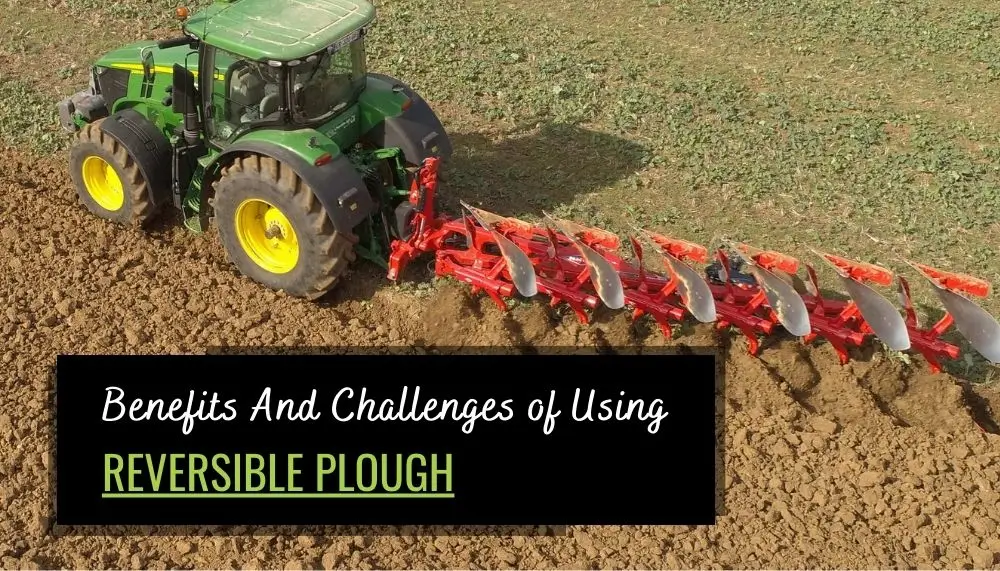
From the 19th and 20th centuries, many modifications were made in agriculture and numerous tools were also developed. The most common and useful implement among them is the Reversible Plough, it’s changing how farmers get fields ready for planting.
This special tool is used by farmers worldwide, making the job of preparing fields much easier. In this blog, let’s explore the comparative things about the reversible plough.
Pros And Cons of Using Reversible Plough
Advantages of Reversible Plough
1. Time and Labor Efficiency
One of the primary advantages of the reversible plough is its time-saving and labor-efficient design. Unlike traditional ploughs that require manual turning at the end of each furrow, this plough swiftly changes its direction without lifting it from the ground. This reduces downtime and increases the overall efficiency of field operations, allowing farmers to cover more ground in less time.
2. Fuel Savings
The efficient thing about the reversible plough is that it helps save fuel. The design of this implement is made in such a way that it reduces the load on the tractor while pulling the plough, which means it doesn’t use too much fuel. Farmers save a good amount of money as the equipment is fuel-friendly.
3. Reduced Soil Compaction
Reversible ploughs are like soil saviours! They’re really good at not pressing down too hard on the soil. The way they’re made spreads the weight evenly, so the soil doesn’t get squished too much. It is important, as it helps the soil stay healthy and makes it easier for plant roots to grow.
4. Enhanced Maneuverability
The reversible plough’s ability to turn without lifting allows for enhanced maneuverability in the field. Farmers navigate corners and tight spaces more efficiently, optimizing the use of available land. This feature is especially beneficial in irregularly shaped fields where traditional ploughs might face challenges.
5. Conservation of Moisture
By minimizing soil disturbance and compaction, reversible ploughs contribute to better moisture retention in the soil. This is crucial for regions facing water scarcity or irregular rainfall patterns. The conservation of moisture supports crop growth and contributes to more reliable yields.
Disadvantages of Reversible Plough
1. Initial Investment Cost
One of the primary drawbacks of these ploughs is the initial investment cost. These implements are generally more expensive than traditional ploughs. The higher upfront cost be a barrier for small-scale farmers or those operating with limited budgets. However, it’s essential to consider the future-oriented benefits and savings in operational costs.
2. Maintenance Complexity
Reversible ploughs, with their intricate design and hydraulics, are more complex to maintain compared to traditional ploughs. Regular maintenance, including checking hydraulic systems and ensuring proper alignment, is crucial to ensure optimal performance. This complexity may require specialized knowledge or professional assistance for repairs.
3. Limited Effectiveness in Certain Soil Conditions
While reversible ploughs excel in many soil types, they may be less effective in extremely rocky or stony soils. The risk of damage to plough components increases in such conditions, impacting both performance and longevity. Farmers operating in areas with challenging soil conditions may need to consider alternative implements for specific tasks.
4. Dependence on Tractor Power
Using reversible ploughs needs powerful tractors. In places where farmers don’t have these tractors, the plough might not work at its best. So, it’s like having a super tool, but if your tractor isn’t super strong, the tool can’t do all its major functions. This makes it a bit tricky for farmers in different places where they don’t have big, strong tractors.
5. Learning Curve for Operators
Switching from the regular plough to the reversible one might feel a bit new for the people using it. One needs to learn about how it works, know all the buttons, and how to make it work best. It’s like getting to know a new gadget.
But don’t worry! There are helpful things to learn from that make it easier. So, it’s like having a guide to help you learn about this new farming tool.
If we combine all these things, it has many positive impacts as well as some challenges. So let’s know about it in short.
Positive Aspects
Reversible ploughs are great for farmers in a few important ways. First, they make farming faster. It’s like having a fast helper in the field, getting the work done quickly. Second, they’re good for the environment and save on fuel.
It’s a highly helpful tool for saving the planet and money. Lastly, they keep the ground healthy, so it’s perfect for growing crops.
Challenges
There are challenges along with the benefits of reversible ploughs. In the beginning, this plough tends to cost a bit more, and it needs some extra care. Also, farmers need to learn how to use it, befriending the plough takes some time, and eventually getting acquainted with the usage for ultimate profits.
Conclusion
In the end, the reversible plough is the ultimate profit earner for farmers, making farming better and smarter. It’s changing the game in agriculture. It makes farming easier and faster, saving time and energy.
Sure, it costs a bit more at the start, and needs some extra care, but the good things it does for farming are much more.
Farmers just need to think about what they need and understand how it works. Giving it a little training and regular check-ups will keep it working well. As farming keeps getting better, the reversible plough is like a trusted friend for farmers who want to grow crops smartly and sustainably.